
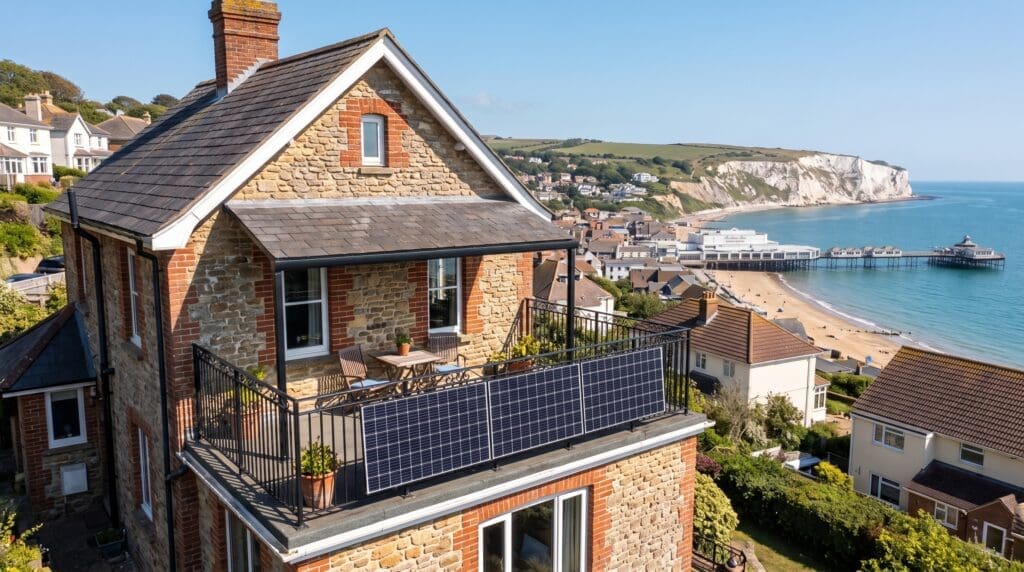
Green Isle of Wight offers trusted guidance on balcony solar for Island residents and renters. We help you understand how plug-in solar works, assess your outdoor space and supply systems meeting the latest UK safety standards.
Our service saves you time while ensuring your installation complies with the regulatory framework introduced on 27 August 2026. Plus, all income generated helps fund our wider work supporting Island residents struggling with fuel poverty.
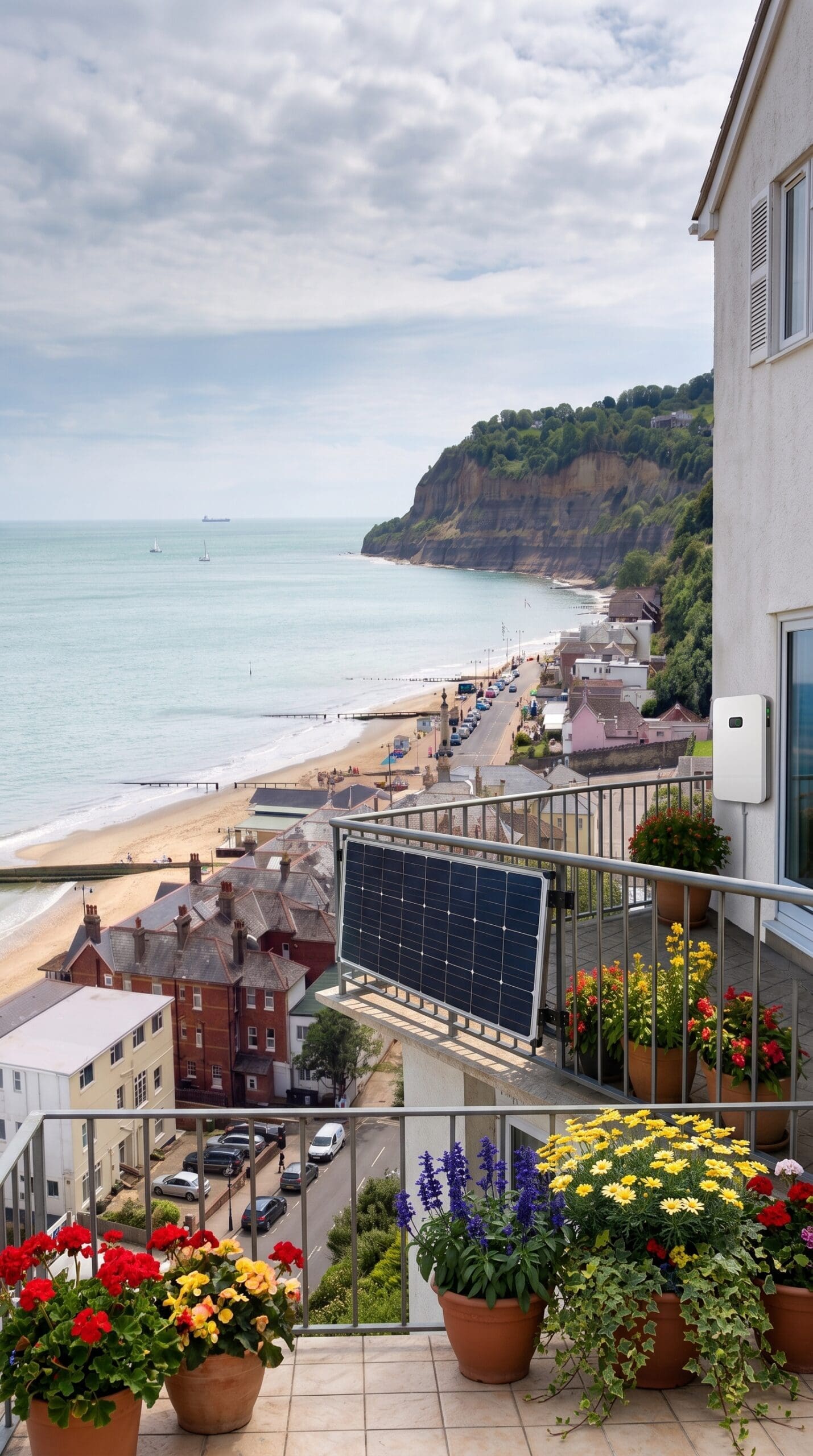
New regulations, strict compliance standards and confusing electrical requirements can make solar difficult to navigate. Buying plug-in solar online can be complex and risky if the equipment isn’t certified for the UK. Households may accidentally purchase systems that exceed the legal 800 VA (approximately 800 watts) limit. Installing equipment incorrectly or using unverified third-party marketplaces can also compromise your home’s safety. Green Isle of Wight can manage the compliance checks and explain your options clearly.

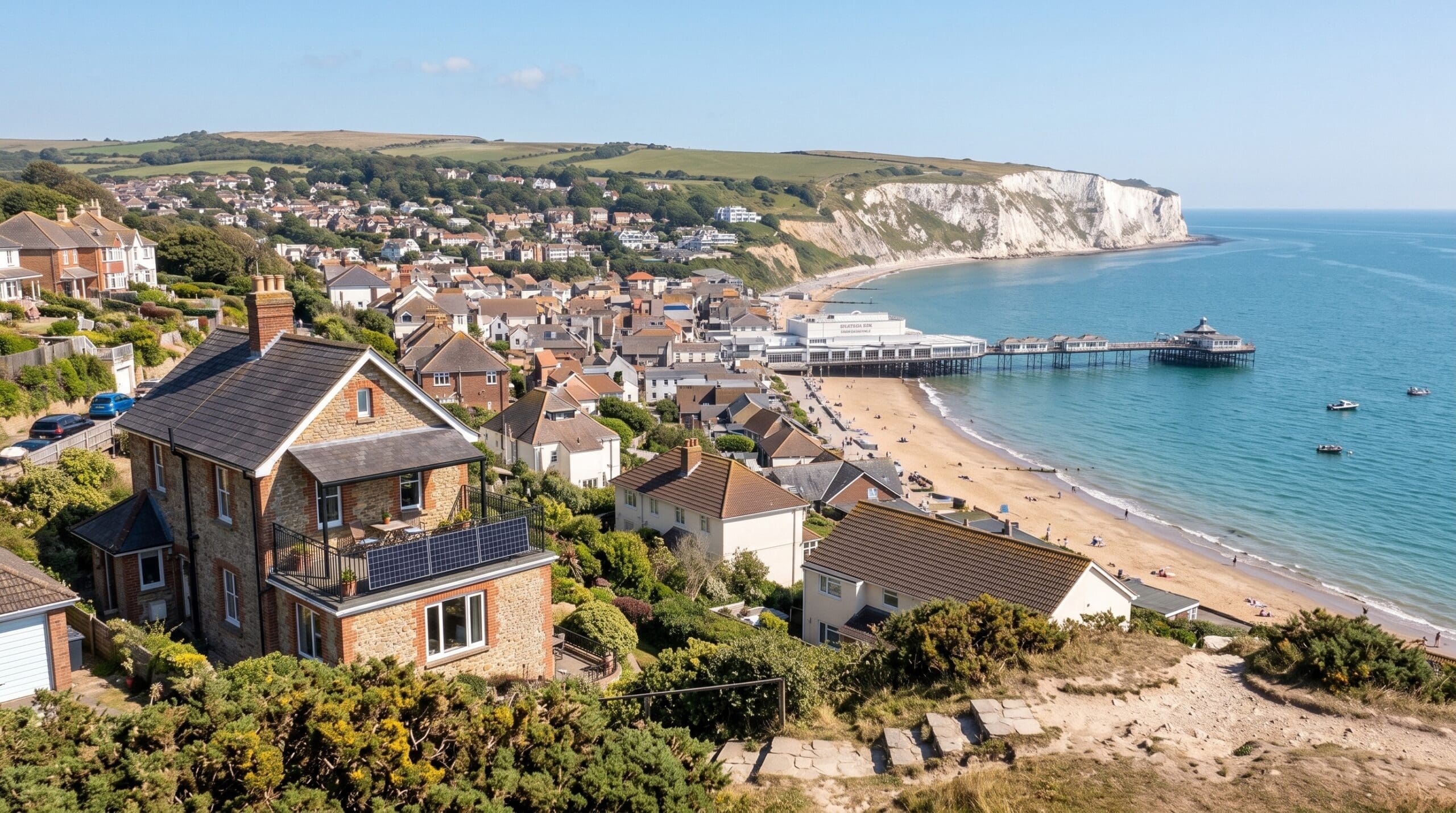
Balcony solar is a small solar-energy system designed for homes that may not have access to a suitable roof. It normally includes one or more solar panels, a mounting system and a microinverter that converts the electricity generated into power your home can use.
Despite the name, these systems may also be suitable for certain terraces, gardens, walls or fences.
The panels convert daylight into electricity. A microinverter changes this electricity into the type used by your household appliances.
Your home uses the solar electricity as it is generated, reducing the amount of electricity you need to buy from the grid. Any electricity not used immediately may flow back to the grid unless the system includes an approved export-limiting function.
Yes. From 27 August 2026, compliant plug-in solar systems can legally be sold and used in Great Britain under the new regulatory framework.
The complete system must meet the government’s Plug-in Solar Device Interim Product Specification. Different connection requirements may apply in Northern Ireland.
A compliant plug-in system is designed to be installed by an ordinary householder without a dedicated electrical circuit. However, not every property or electrical installation will be suitable.
We recommend having your electrics checked by a registered electrician before purchasing, particularly if your home is older, you do not know the condition of its wiring, or you are unsure what type of RCD protection you have.
The system must be connected directly to a suitable UK socket using only the plug and cable supplied by the manufacturer.
Never connect balcony solar through an extension lead, cable reel, multiway adaptor, travel adaptor or plug-in RCD adaptor. If an outdoor socket is used, it must have the appropriate weather-protection rating specified by the manufacturer.
A compliant UK plug-in solar device must limit its output to no more than 800 VA, approximately 800 watts.
Only one plug-in solar device is currently permitted per household under the applicable electricity-network requirements.
A suitable location should:
Before installation, check the dimensions, weight and mounting requirements of the system against your balcony’s construction.
No. A south-facing location will generally produce the most electricity over the year, but east- and west-facing panels can still work well.
East-facing panels generate more power in the morning, while west-facing panels produce more later in the day. North-facing or heavily shaded locations are likely to generate substantially less.
Yes. Solar panels generate electricity from daylight, not just direct sunshine. They will still produce power on cloudy days, although output will normally be lower.
Generation also changes with the season, with longer and brighter summer days typically producing more electricity than winter days.
This depends on the system’s size, orientation, angle, location, shading and local weather. Two identical systems can generate different amounts if they are installed in different positions.
We can provide an estimate based on your proposed location, but actual generation will vary and cannot be guaranteed.
Your savings depend on how much electricity the system generates, your electricity tariff and how much solar power you use while it is being produced.
You will usually get the greatest benefit by running suitable appliances during daylight hours. We will provide realistic estimates based on your circumstances rather than promising a fixed saving.
Usually not. Balcony solar is smaller than a typical rooftop system and is intended to reduce your background electricity consumption rather than supply everything in your home.
During sunny periods it may help cover appliances such as your fridge, broadband router, computer and other everyday devices. If your household needs more power, the remainder is automatically drawn from the grid as normal.
Yes. You will continue to use grid electricity whenever your home needs more power than the panels are generating, as well as at night.
Balcony solar reduces the electricity you purchase; it does not normally eliminate your bill.
No. For safety, a grid-connected microinverter automatically stops supplying electricity when it detects a power cut. This prevents electricity being fed into wiring while engineers may be working on the network.
Standard plug-in balcony solar is not a backup-power system.
The UK plug-in solar framework does not cover plug-in batteries or solar devices with integrated battery systems.
A separately installed battery may require different equipment, professional installation and additional approvals. Please speak to us before combining the system with any storage product.
Possibly, but eligibility is not automatic. Smart Export Guarantee providers set their own application and metering requirements and will normally require evidence that an installation meets their certification criteria.
Because balcony systems are relatively small, using the electricity in your home as it is generated will often provide more value than exporting it. Check with your chosen export-tariff provider before relying on export payments.
Plug-in solar must comply with the applicable electricity-network connection requirements. The registration process should be explained in the product instructions, and assistance may be available from the manufacturer or retailer.
We will explain what information is required for the system we supply and who is responsible for submitting it.
Many solar installations do not require planning permission, provided they meet the relevant conditions. However, the position can vary according to how and where the panels are mounted.
You should check with your local planning authority if you live in a listed building or conservation area, if the panels will materially alter the building’s exterior, or if permitted-development rights have been restricted.
You should obtain written permission from your landlord before attaching panels or mounting equipment to a balcony, wall, fence or another part of the property.
Leaseholders should also check their lease and obtain any required approval from the freeholder, building owner or managing agent.
It should not when the correct mounting system is used on a suitable structure and installed according to the manufacturer’s instructions.
Only use the mounting components supplied or approved for the system. Panels must never be secured solely with cable ties, rope, string, tape, bungee cords or improvised fittings.
A compliant mounting system must be designed for its intended position and expected structural loads. Correct installation is essential, particularly when panels are mounted above ground level.
Follow the manufacturer’s instructions and inspect the mounting periodically. If the balcony, railing or proposed position appears unsuitable, seek professional advice before installing the system.
Components intended for outdoor use must have the required protection against rain, moisture, sunlight and other weather conditions.
Do not assume that every part can be placed outdoors. Follow the product instructions for the panel, inverter, connectors, cables, plug and socket.
Balcony solar generally requires little maintenance. Keep the panels reasonably clean and free from leaves, heavy dirt or other obstructions, and periodically inspect the cables, connectors and mounting system.
Do not lean over a balcony or work at height to clean or inspect a panel. Arrange professional help if it cannot be reached safely.
Solar panels are designed to operate for many years, although their output gradually reduces over time. Microinverters and other components may have a different expected lifespan.
The specific product warranty and performance terms will be shown with each system.
Potentially, yes. One advantage of balcony solar is that it may be easier to relocate than a permanently installed rooftop system.
The system must be safely removed and reassessed for the new property. You will also need permission from the new landlord, freeholder or managing agent where applicable and may need to update its network registration.
Policies differ, so you should tell your buildings or contents insurer before installation. If you rent or lease your home, the landlord, freeholder or managing agent may also have insurance requirements.
Keep the purchase receipt, product documentation and any permission or registration records.
Purchase a complete UK system from a reputable supplier and check that it states compliance with the current Plug-in Solar Device Interim Product Specification.
Use only the panels, inverter, cables, plug, connectors and mounting equipment supplied or approved for that system. Avoid mixing components from different products or buying an unverified system from a third-party marketplace.